


With the rapid expansion of the Internet of Things (IoT), billions of connected devices are now part of our daily lives, spanning applications such as smart homes, industrial automation, healthcare, and agriculture. A significant challenge for many of these IoT devices is ensuring energy efficiency, as they often rely on limited power sources such as batteries or energy harvesting. The antenna, as the critical component enabling wireless communication, plays a crucial role in optimizing power consumption while maintaining robust and reliable connectivity.
This article explores the significance of antenna design for low-power IoT devices, the key factors influencing antenna performance, the challenges of achieving energy efficiency, and how advanced antenna technologies are helping IoT devices operate efficiently in a power-constrained environment.
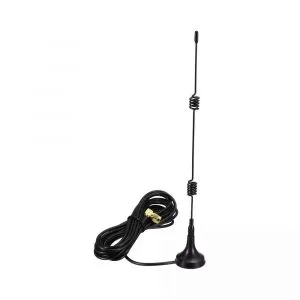
Why Antenna Design Matters for Low-Power IoT Devices
The antenna is responsible for transmitting and receiving wireless signals, making it the lifeline of any IoT device. However, an inefficient antenna can lead to:
- Increased power consumption as the device compensates for poor signal strength.
- Reduced communication range and reliability, requiring retransmissions that further drain the battery.
- Performance bottlenecks that limit the IoT device’s overall usability.
For low-power IoT devices, such as sensors, trackers, and wearables, optimizing the antenna design is crucial to achieve:
- Power Efficiency: Ensuring that the antenna operates effectively with minimal energy consumption.
- Signal Strength: Maintaining robust communication over the required range with minimal loss.
- Size and Form Factor: Fitting within compact IoT devices without compromising performance.
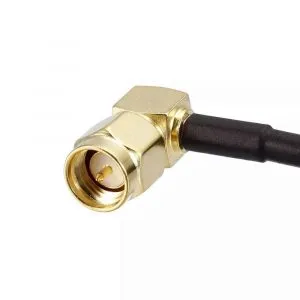
Key Factors in Antenna Design for Low-Power IoT
Frequency Band Selection
IoT devices operate across a variety of wireless communication protocols and frequency bands, such as:
- Sub-GHz bands (433 MHz, 868 MHz, 915 MHz) for long-range, low-power applications like LoRaWAN and Sigfox.
- 2.4 GHz for short-range, high-bandwidth applications like Wi-Fi, Bluetooth, and Zigbee.
- 5 GHz and beyond for applications requiring faster data rates but shorter range.
The choice of frequency band has a direct impact on power consumption:
- Lower frequencies (e.g., Sub-GHz) generally consume less power and support longer ranges, making them ideal for low-power IoT applications.
- Higher frequencies require more power but enable faster data transfer, which is useful for applications like video streaming or real-time monitoring.
The antenna must be optimized for the specific frequency band(s) the IoT device operates on to maximize efficiency.
Antenna Efficiency
Antenna efficiency measures how effectively the antenna converts electrical power into radio waves and vice versa. Low-power IoT devices demand antennas with high efficiency to minimize energy losses.
- For battery-powered devices, even small improvements in efficiency can lead to significant extensions in battery life.
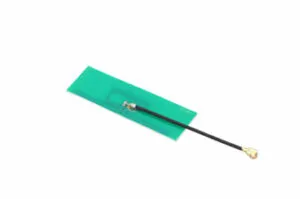
- PCB antennas, ceramic chip antennas, and flexible antennas are common in IoT devices due to their balance of efficiency, size, and cost.
Size and Compactness
Many IoT devices have stringent size constraints, requiring antennas to be compact without sacrificing performance. Achieving this balance involves innovative design approaches, such as:
- Miniaturized antennas that use space-saving techniques like folded structures or embedded designs.
- Integrated antennas that are directly embedded into the PCB, saving space but requiring precise tuning for optimal performance.
Impedance Matching
Proper impedance matching ensures that maximum power is transferred between the antenna and the IoT device’s circuitry. Mismatched impedance can lead to significant power loss, reducing the efficiency of the device.
- Matching networks or tuners can be used to ensure that the antenna operates optimally across its intended frequency range.
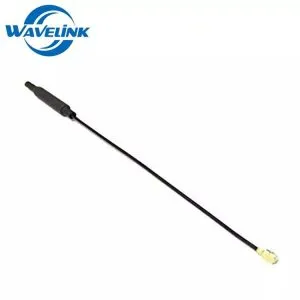
Low-Power Antenna Technologies for IoT Devices
Multi-Band Antennas
IoT devices often need to support multiple communication protocols or frequency bands. Multi-band antennas enable this flexibility without requiring separate antennas for each band, reducing both size and power consumption.
- For example, a single multi-band antenna can support Wi-Fi, Bluetooth, and Zigbee in the 2.4 GHz range, while also covering LTE-M or NB-IoT for cellular connectivity.
Directional Antennas
Directional antennas focus the signal in a specific direction, improving efficiency and range. This is particularly useful for applications like:
- Environmental sensors in remote areas, where power-saving is critical, and a focused signal can ensure reliable connectivity.
- Smart meters, which often need to communicate with a fixed base station.
Energy Harvesting Antennas
Some IoT devices incorporate antennas capable of harvesting ambient energy (e.g., from Wi-Fi signals, solar energy, or RF signals). These antennas help supplement the device’s power source, reducing reliance on batteries.
- RF energy harvesting is a growing field, where antennas collect energy from nearby electromagnetic waves and convert it into usable power.
Flexible Antennas
Flexible antennas made from materials like polyimide or PET are ideal for wearable IoT devices or applications where the antenna needs to conform to irregular shapes. These antennas are lightweight, energy-efficient, and can be integrated into compact designs.
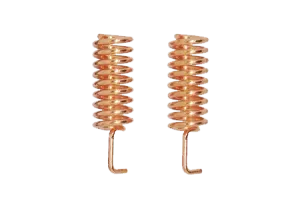
Challenges in Designing Low-Power Antennas
Despite advancements, designing antennas for low-power IoT devices comes with its challenges:
Trade-Offs Between Size and Performance
- Miniaturization often reduces antenna efficiency, requiring careful design to maintain performance.
Environmental Factors
- IoT devices often operate in diverse environments, from urban settings with high interference to rural areas with weak signals. The antenna must be designed to handle these conditions without consuming excessive power.
Cost Constraints
- IoT devices are often produced in large quantities, making cost a significant factor. Antenna designs must balance performance and cost-efficiency.
Applications of Low-Power IoT Antennas
Smart Homes
- Devices like smart locks, thermostats, and lighting systems rely on low-power antennas for seamless connectivity without frequent battery replacements.
Healthcare
- Wearable devices, such as fitness trackers and medical monitoring devices, require compact, lightweight antennas that minimize power consumption while maintaining reliable communication with smartphones or healthcare platforms.
Agriculture
- IoT sensors used for soil moisture monitoring, weather tracking, and livestock management often operate in remote areas. Low-power antennas ensure long-lasting operation on limited power sources like batteries or solar panels.
Asset Tracking
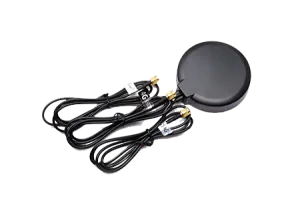
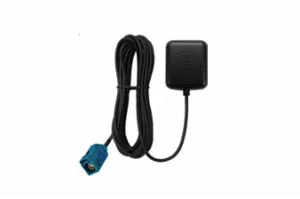
- Low-power antennas are critical for GPS trackers and logistics monitoring devices that need to operate over extended periods without recharging.
Future Trends in Low-Power Antenna Design
AI-Optimized Antenna Design
Artificial intelligence is increasingly being used to optimize antenna designs, balancing factors like size, efficiency, and frequency tuning for specific IoT applications.
Advanced Materials
New materials, such as metamaterials and graphene, are being explored for antenna manufacturing. These materials offer the potential for higher efficiency and smaller size.
Integration with 5G and Beyond
As 5G networks become more prevalent, low-power antennas will need to support high-frequency bands while maintaining energy efficiency. Future designs may also need to accommodate 6G technologies.
Conclusion
Antennas are a critical component in enabling the success of low-power IoT devices, ensuring reliable connectivity while optimizing energy efficiency. From compact wearables to remote sensors, antenna technology continues to evolve to meet the demands of power-constrained environments. By focusing on factors such as efficiency, size, and multi-band capabilities, antenna manufacturers can drive the future of IoT innovation, paving the way for smarter, more sustainable connected solutions.