


The advent of 5G technology has brought about a new era of connectivity, enabling ultra-fast speeds, low latency, and massive device connectivity. As more devices become connected and the Internet of Things (IoT) continues to grow, antennas will play a pivotal role in enabling the seamless integration of 5G networks with IoT applications. From smart cities to autonomous vehicles, 5G and IoT integration is driving innovation across industries, and the right antenna technology is crucial for optimizing performance.
In this article, we explore how antenna technology is shaping the future of 5G networks and the IoT ecosystem, the challenges and opportunities that come with this integration, and the role of specialized antennas in supporting 5G’s promises of faster, smarter, and more reliable connectivity.
The Role of Antennas in 5G and IoT Integration
In a 5G world, antennas are more critical than ever. 5G offers a dramatic increase in data speeds, network capacity, and connectivity, which is essential for the success of IoT applications that require real-time communication, massive device density, and low-power consumption. Antennas are responsible for transmitting and receiving the electromagnetic waves that carry this data.
5G networks use millimeter-wave (mmWave) frequencies, which can carry large amounts of data over short distances but have challenges with penetration and range. To overcome these challenges, the antenna technology needs to be optimized for high-frequency signals, beamforming, and massive MIMO (Multiple Input, Multiple Output) systems, all of which are essential for delivering the ultra-fast, low-latency communication that 5G promises.
As IoT devices become more prevalent, they will rely on 5G’s ability to handle massive numbers of connected devices simultaneously, facilitating the growth of applications such as smart homes, smart cities, healthcare, and autonomous transportation.

Key Factors Driving Antenna Technology for 5G and IoT
Several factors are influencing the development of antenna technologies that support the integration of 5G with IoT devices. These include:
Millimeter-Wave (mmWave) Technology
5G networks are designed to operate on a broad range of frequencies, including the mmWave bands (24 GHz and higher). These high-frequency waves enable ultra-fast data transmission but are less able to penetrate obstacles like buildings and trees. To maintain the reliability and speed of 5G connections in urban environments, advanced antenna designs are required.
- Phased-array antennas and beamforming technology are integral to mmWave 5G networks. These technologies allow antennas to dynamically steer beams of radio waves to specific locations, improving signal quality and minimizing interference.
- IoT devices that operate in environments with high density, such as smart cities, will rely heavily on beamforming and massive MIMO to ensure efficient communication even in congested urban spaces.
Antenna Miniaturization for IoT Devices
While 5G requires larger, more powerful antennas, many IoT devices demand compact, low-profile antennas due to their size constraints. IoT applications, ranging from wearables and smart meters to industrial sensors, require antennas that can fit into small spaces without compromising on performance.
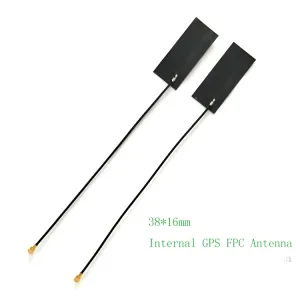
- PCB (Printed Circuit Board) antennas and flexible antennas are ideal for these small-form-factor devices, enabling manufacturers to create ultra-compact IoT solutions.
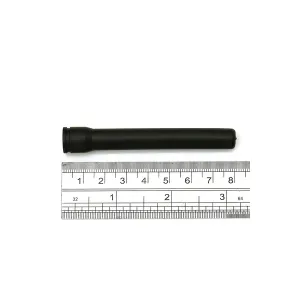
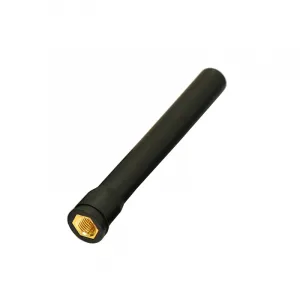
- For outdoor applications, where long-range connectivity is crucial, antennas such as fiberglass antennas or omni-directional antennas can be designed to be both compact and rugged, suitable for environments like agriculture or remote asset tracking.
Low-Power Antennas for IoT Applications
In IoT systems, many devices are battery-powered and need to operate for extended periods without frequent recharging. Power efficiency is a critical consideration for the antenna, as it can directly influence the overall energy consumption of the device.
- Low-power antennas that are optimized for short-range communication protocols like Bluetooth Low Energy (BLE), Zigbee, and LoRaWAN are essential in reducing the power demands of IoT devices.
- By minimizing energy consumption while ensuring reliable communication, these antennas help extend the life of battery-powered IoT devices, making them ideal for applications in fields like smart agriculture, healthcare, and smart metering.
How 5G Enables New IoT Applications
5G’s high-speed, low-latency capabilities are opening up new possibilities for IoT applications, and the performance of the antennas will be crucial in delivering on these promises. Here’s a closer look at some of the industries where 5G and IoT integration will transform the landscape:
Smart Cities
The vision of smart cities is made possible by the combination of 5G connectivity and IoT devices. In smart cities, everything from traffic lights to waste management systems to air quality sensors needs to be connected and communicate in real time.
- 5G networks enable low-latency communication between IoT devices, allowing for real-time monitoring and control of infrastructure.
- Small cell antennas, which are essential for improving coverage and capacity in densely populated urban environments, will be deployed at a much larger scale in smart cities to provide seamless connectivity for millions of devices.
As smart cities grow, 5G antennas will need to be able to handle massive device density and high-frequency bands while maintaining energy efficiency and low latency.
Autonomous Vehicles
Autonomous vehicles rely heavily on IoT devices for real-time communication with other vehicles, infrastructure, and pedestrians. 5G’s low latency and high bandwidth make it the ideal technology for supporting these communications.
- 5G antennas will enable vehicle-to-vehicle (V2V) and vehicle-to-infrastructure (V2X) communication, which are essential for the safe and efficient operation of autonomous vehicles.
- mmWave antennas will be needed to support high-bandwidth applications, such as streaming video data from sensors, cameras, and radar systems, that are required for real-time decision-making in self-driving cars.
Industrial IoT (IIoT)
Industrial IoT (IIoT) applications, such as predictive maintenance, asset tracking, and remote monitoring, require reliable, low-latency communication across large areas. 5G’s high-speed data transfer and massive device connectivity capabilities are ideal for IIoT use cases.
- 5G antennas will be essential for maintaining high connectivity in large industrial plants or outdoor sites, where multiple IoT devices need to be connected simultaneously.
- MIMO (Multiple Input, Multiple Output) antenna technology will be used to improve the capacity and range of communication in industrial environments, ensuring that devices like sensors and machines can communicate effectively even in challenging conditions.
Overcoming the Challenges of 5G and IoT Integration
Despite the immense potential of 5G and IoT integration, there are several challenges that need to be addressed in terms of antenna design and deployment.
Spectrum Management
The global rollout of 5G networks requires managing a diverse range of frequency bands across different regions. Antenna manufacturers must develop solutions that are compatible with the different frequency bands used by 5G networks around the world.
- Multi-band antennas capable of operating across multiple frequency ranges will be essential for ensuring global compatibility for IoT devices.
- Antenna systems that can efficiently handle the dense frequency bands used by 5G networks and IoT devices are crucial for maintaining seamless connectivity.
Interference and Signal Quality
With the increase in the number of connected devices, ensuring signal quality and reducing interference will become more challenging. Antennas need to be designed to mitigate interference from other devices and ensure that IoT devices maintain a stable connection.
- Advanced antenna designs such as beamforming and massive MIMO can be used to focus signals in specific directions, improving signal strength and reducing interference.
Cost Considerations
As 5G networks are rolled out on a large scale, antenna manufacturers will need to balance performance with cost efficiency. IoT devices, especially those used in high-volume applications like smart homes or wearables, require affordable antennas that don’t compromise on performance.
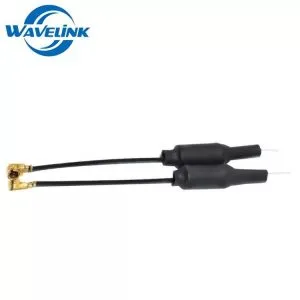
- Low-cost antenna solutions, such as printed antennas or integrated antennas, will be critical in ensuring that IoT devices remain affordable while still benefiting from 5G’s advanced capabilities.
Conclusion
As 5G technology continues to evolve, it is unlocking new opportunities for IoT applications across industries. Antenna technology is at the heart of this transformation, driving the performance, connectivity, and scalability of 5G-enabled IoT devices. From small-form-factor antennas for wearables and smart cities to high-performance mmWave antennas for autonomous vehicles and industrial IoT, the right antenna technology is crucial to ensure that 5G and IoT work in harmony.
As 5G continues to be deployed globally, the demand for specialized antennas will only grow. Whether it’s ensuring reliable, low-latency communication in dense urban environments or enabling long-range, low-power connectivity for remote devices, antennas will continue to shape the future of the IoT ecosystem