


The demand for high-precision GPS technology has surged in recent years, driven by applications in autonomous vehicles, drones, precision agriculture, surveying, and industrial IoT. At the heart of these systems lies the antenna, a critical component responsible for receiving GPS signals from satellites and enabling accurate positioning.
Achieving high precision in GPS applications requires more than just advanced algorithms and hardware—it demands optimized antenna designs that ensure reliability, low latency, and minimal interference in diverse environments. This article delves into the key aspects of antennas in high-precision GPS systems, the challenges involved, and the emerging technologies shaping this field.

The Importance of Antennas in High-Precision GPS
GPS antennas are specialized to capture weak signals from satellites orbiting thousands of kilometers above Earth. For high-precision GPS applications, antennas must meet the following requirements:
- High Sensitivity: To receive weak signals with minimal noise.
- Multi-Band Support: To utilize signals from multiple satellite constellations (e.g., GPS, GLONASS, Galileo, BeiDou) and frequency bands (L1, L2, L5).
- Interference Rejection: To mitigate multipath effects, interference from nearby RF sources, and environmental noise.
- Compact Design: For applications like drones and wearables where size and weight are critical.
- Reliability in Harsh Environments: To function effectively in extreme temperatures, vibrations, and challenging terrains.

Key Considerations in Antenna Design for High-Precision GPS
Frequency Bands
High-precision GPS systems leverage multiple frequencies for better accuracy and reliability:
- L1 Band (1575.42 MHz): The primary frequency for civilian GPS.
- L2 Band (1227.6 MHz): Used for advanced applications requiring higher accuracy.
- L5 Band (1176.45 MHz): Reserved for safety-critical applications such as aviation.
Modern GPS antennas are designed to support multiple frequencies simultaneously, enabling dual-band or triple-band operation for enhanced precision.
Polarization
GPS signals are transmitted using right-hand circular polarization (RHCP). Antennas must be optimized to match this polarization to maximize signal reception while rejecting reflected or multipath signals, which are typically left-hand circularly polarized (LHCP).
Gain and Radiation Pattern
The radiation pattern of the antenna determines its ability to receive signals from satellites in various positions:
- Omnidirectional antennas are suitable for general-purpose applications, providing uniform coverage in all directions.
- High-gain directional antennas are used in specialized applications like surveying or UAVs for extended range and accuracy.
Multipath Rejection
Multipath signals, caused by reflections from surfaces like buildings or water, can distort GPS readings. Antennas designed for high-precision GPS include features like:
- Low axial ratio: Ensuring better discrimination between direct and reflected signals.
- Choke rings: Reducing interference from ground reflections.

Challenges in Antenna Design for High-Precision GPS
Environmental Interference
- Urban environments introduce challenges like multipath distortion and interference from nearby wireless devices.
- In rugged environments (e.g., forests, mountains), signal blockage and attenuation can degrade performance.
Size and Weight Constraints
High-precision GPS antennas must often be integrated into compact systems like drones or portable devices. Designing antennas that balance size, weight, and performance is a significant challenge.
Power Efficiency
For battery-powered devices, minimizing power consumption while maintaining high sensitivity is critical. This requires efficient antenna designs and optimized circuitry.
Compatibility with Multi-Constellation Systems
Modern GPS systems often combine signals from multiple constellations (e.g., GPS, Galileo, BeiDou) to enhance accuracy. Antennas must be designed to support these multi-constellation signals without introducing interference.
Innovations in High-Precision GPS Antenna Technology
Active Antennas
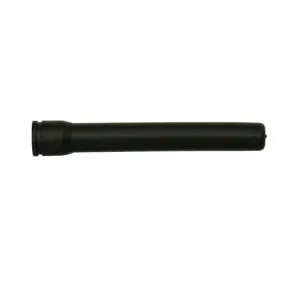
Active antennas incorporate low-noise amplifiers (LNAs) to boost weak GPS signals, improving sensitivity and reducing noise. These are particularly useful in applications where signal strength is critical, such as dense urban areas.
Multi-Band and Multi-Constellation Antennas
- Multi-band antennas allow reception across L1, L2, and L5 frequencies, improving accuracy and reliability.
- Multi-constellation antennas enable simultaneous tracking of signals from GPS, GLONASS, Galileo, and BeiDou satellites.
Phased Array Antennas
Phased array technology enables beamforming, where the antenna dynamically adjusts its radiation pattern to focus on specific satellites. This improves signal strength and reduces interference, making it ideal for high-precision GPS applications like autonomous vehicles.
Flexible and Lightweight Designs
Advanced materials and manufacturing techniques have enabled the development of flexible antennas for integration into compact or unconventional device shapes. These are particularly useful in wearables and UAVs.
Choke Ring Antennas
Choke ring antennas use concentric metal rings to suppress multipath signals and improve signal quality. They are commonly used in geodetic applications and permanent GPS reference stations.
Applications of High-Precision GPS Antennas
Autonomous Vehicles
Self-driving cars and drones rely on high-precision GPS antennas to ensure accurate navigation and positioning. Multi-band, high-gain antennas are essential to handle the dynamic movement and varying environments these vehicles encounter.
Precision Agriculture
Farmers use GPS-enabled equipment for tasks like seed planting, soil analysis, and crop monitoring. High-precision antennas ensure reliable positioning and guidance, even in remote or rural areas.
Surveying and Mapping
Surveyors depend on high-accuracy GPS for land measurements, construction planning, and geological studies. Antennas with low multipath error and high sensitivity are critical in this field.
Industrial IoT
Applications like asset tracking, fleet management, and remote monitoring require robust and compact GPS antennas for continuous and accurate location data.
Aviation and Marine Navigation
Safety-critical applications in aviation and marine navigation demand antennas that operate reliably under challenging conditions, such as high speeds, turbulence, and harsh weather.
Future Trends in High-Precision GPS Antenna Design
AI-Driven Antenna Optimization
Artificial intelligence and machine learning are being used to optimize antenna designs for specific applications, balancing factors like size, frequency, and interference rejection.
5G Integration
As 5G networks become more widespread, GPS antennas are being integrated with 5G communication systems to enable seamless connectivity and enhanced positioning.
Advanced Materials
Materials like graphene and metamaterials are being explored for their potential to improve antenna performance, reduce size, and enhance durability.
GNSS Modernization
Ongoing updates to global navigation satellite systems (GNSS), including additional frequencies and improved signals, will drive the development of next-generation GPS antennas capable of leveraging these advancements.
Conclusion
The antenna is a cornerstone of high-precision GPS systems, directly influencing the accuracy, reliability, and efficiency of these devices. As applications like autonomous vehicles, precision agriculture, and industrial IoT continue to expand, the demand for innovative antenna designs will only grow. By addressing challenges such as interference, size constraints, and multi-band support, manufacturers can unlock the full potential of GPS technology and drive the next wave of connectivity and precision in a wide range of industries.